The Bilingual Buyer Problem Nobody Puts on Their Website
English-only websites lose Spanish-speaking buyers in home services, real estate, auto, and clinics. Here is how a bilingual website concierge captures those leads.

The bilingual buyer problem is simple: a Spanish-speaking visitor lands on your website, cannot find a way to ask for a quote in their language, and leaves. No call, no form, no booking. That visitor was ready to buy, but your site only speaks one side of the conversation. The fix is not a second website or a Google Translate button. It is a website concierge that talks, guides, and closes in English and Spanish from the same script.

What Is the Bilingual Buyer Problem?
Every day, a homeowner in Texas needs an AC repair, a family in California wants a roof estimate, a couple in Florida is looking for a realtor. Many of those buyers speak Spanish as their first language. When they land on an English-only site, they face a wall. They cannot fill out a form confidently, they do not want to guess at a phone menu, and they will not email a stranger in a second language. So they bounce to a competitor who answers in Spanish.
Why a Translate Button Is Not the Answer
A translate widget turns your homepage into Spanish, but it does not turn your contact form into a conversation. The visitor still has to type their request in English, or guess which department to call. Machine translation is fine for reading a blog post. It is terrible for booking a service call at 10 PM when the AC stopped cooling. The buyer needs to say "Necesito una reparación de aire acondicionado" and get a booked appointment back, not a translated page.

How a Bilingual Website Concierge Works
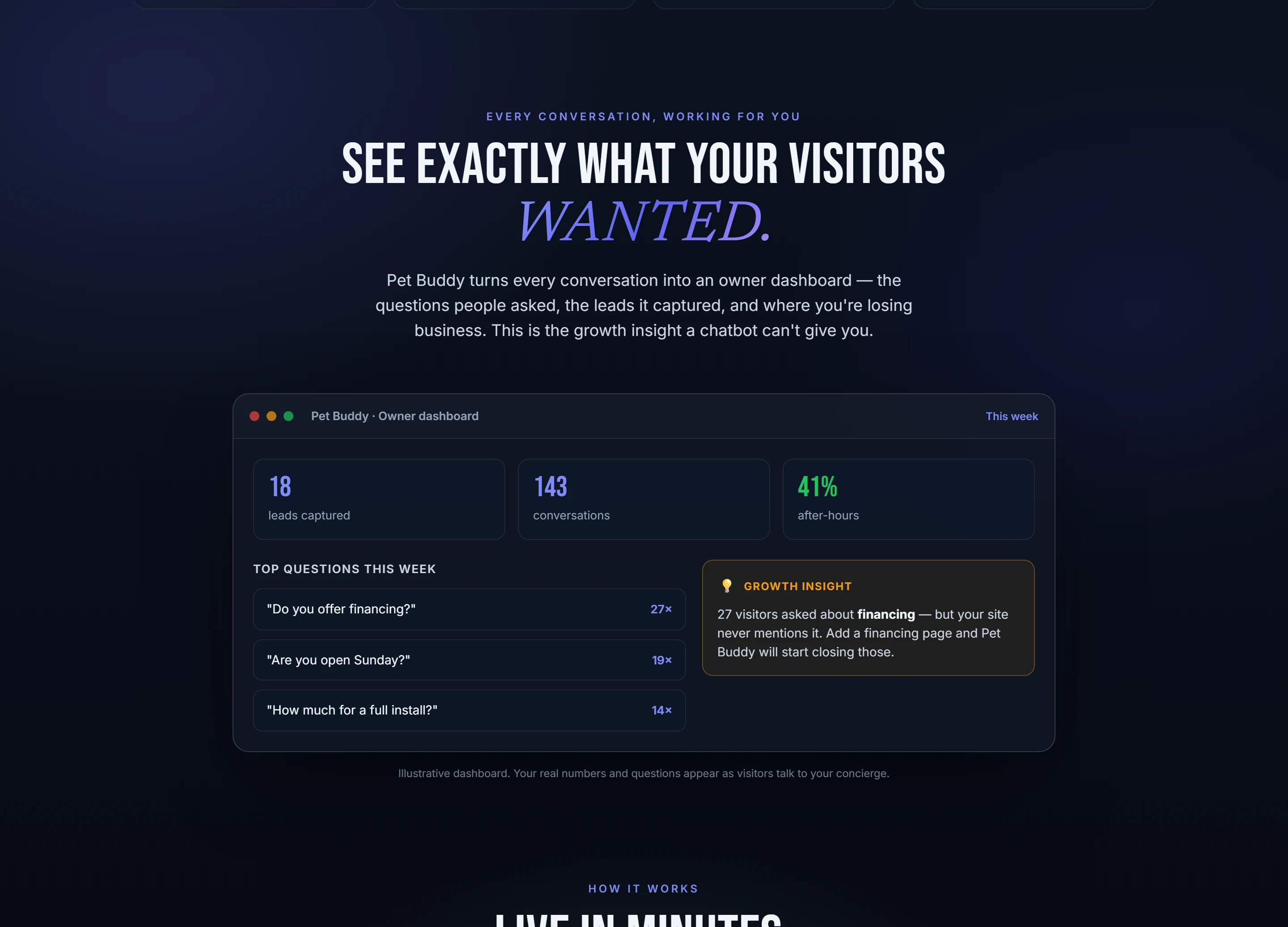
Pet Buddy Concierge drops one script onto your site. When a visitor arrives, the concierge greets them in English or Spanish based on their browser language or a simple click. They can ask for a quote, book a time, request a callback, or get handed to a human — all in the language they chose. The owner sees a dashboard of every conversation, every request, and where leads dropped off.
That means a roofer in Phoenix can capture a Spanish-speaking homeowner at 11 PM, book a morning inspection, and never miss a lead because the site only spoke English. The same script handles English visitors the same way. It is one concierge, two languages, one dashboard.

Where Do Home Services Lose Spanish-Speaking Leads?
Think through a typical HVAC website. A visitor needs a furnace repair. They see a phone number and a contact form. If they speak Spanish, they might try the form and write "necesito reparación. " If nobody checks that form until morning, the lead is cold. Or they call, hear an English recording, and hang up. The leak happens at the exact moment the visitor has to switch languages to take the next step.

What about Real Estate, Auto, and Clinics?
A real estate agent in Miami loses buyers who search for "casas en venta" and land on an English-only listings page. A dealership in Los Angeles has Spanish-speaking service customers who need to book an oil change but cannot navigate the online scheduler. A med-spa in Houston sees Spanish-speaking patients skip the consultation form because it asks for insurance details in English. In every case, the buyer is there. The site just does not let them act.
Three Places Leads Leak on a Monolingual Site
A form that only accepts English text forces the visitor to guess or give up.
A recorded greeting in English makes a Spanish speaker hang up before they ever reach a person.
A calendar widget with English labels stops a visitor who wants to schedule in Spanish.
How Does the Dashboard Help the Owner?
When the concierge handles every visitor conversation, the owner gets a report of what people actually asked for. If half the Spanish-speaking visitors requested emergency plumbing at night, that shows up as a pattern. The owner can decide to staff after-hours or run a Spanish ad campaign for emergency calls. The dashboard does not just show leads captured. It shows revenue that would have been invisible.
A website that only speaks English is turning away buyers who are ready to book right now.
What Does It Take to Add a Bilingual Concierge?
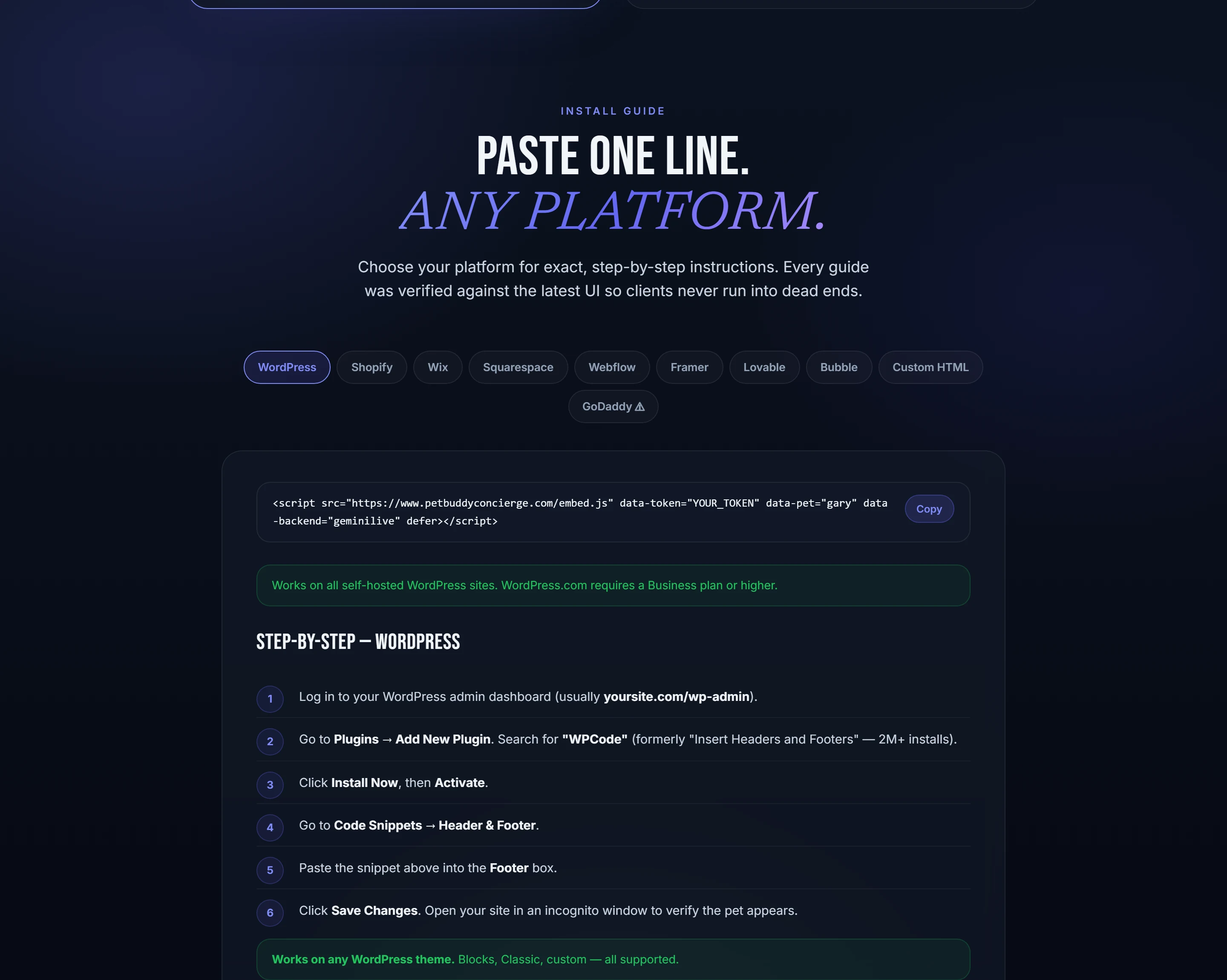
One line of script. No developer, no second site, no translation service. The concierge lives on your existing website and starts working in minutes. It handles the full conversation — greeting, answering common questions, booking a service, capturing a quote request, or handing off to a team member — all in the visitor's chosen language. The owner gets a dashboard with every interaction logged.
Is This Just for Spanish?
English and Spanish are the starting point because that is where home services, real estate, auto, and clinics see the biggest gap. But the same concierge structure works for any pair of languages. The core idea stays the same: let the visitor speak their language, and let the site act on what they say.
Common questions
Do I need a separate Spanish website?
No. The concierge works on your existing site and switches languages automatically or by visitor choice.
Will it work on my WordPress or Wix site?
Yes. One script works on any platform that allows a single line of JavaScript.
Does the concierge book appointments in Spanish?
Yes. A visitor can ask for a quote or book a time slot entirely in Spanish, and the appointment lands on your calendar.
What if a visitor needs to talk to a person?
The concierge can hand off to a human team member in the same language, with the full conversation history.
How do I know what Spanish-speaking visitors wanted?
The owner dashboard shows every request, booking, and drop-off in both languages.
Give your website a voice
Pet Buddy greets every visitor, answers in English or Spanish, and books the next step - live in minutes.
See it live