How to Qualify a Case Inquiry Without Giving Legal Advice
Learn the exact script and system to pre-screen potential clients for your professional service business without crossing into unauthorized practice of law.

You qualify a case inquiry without giving legal advice by sticking to factual intake questions—date, location, parties involved—and never interpreting laws, statutes, or legal rights for the person asking. Your Pet Buddy Concierge can be programmed to collect these facts, hand the qualified lead to a licensed attorney, and keep every conversation in English or Spanish without the business owner ever guessing whether a line was crossed.
What Exactly Counts as Legal Advice?
Legal advice is applying law to a specific person's situation. Telling a caller "you have a strong case" or "you should file before the deadline" is legal advice. Asking "what date did the incident happen? " is not. The line sits between information and interpretation. A well-designed website concierge never crosses it because it never interprets—it only collects and routes.

What Questions Can You Safely Ask?
Safe Intake Questions for Any Case Inquiry
- What is your full name and contact information?
- What date and time did the incident occur?
- Where did the incident take place (city, state)?
- Were there any other people or parties involved?
- Do you currently have an attorney representing you on this matter?
- What type of legal issue are you looking into (divorce, injury, contract, etc.)?
These questions gather facts. They do not evaluate strength, suggest strategy, or recommend action. A visitor who types "I was in a car accident last Tuesday in Dallas" triggers a handoff to a human intake specialist—not an AI-generated opinion on liability.
Why the Risk Is Higher Than You Think
Every state bar association treats unauthorized practice of law (UPL) as a serious offense. A single automated response that reads "you may be entitled to compensation" could be interpreted as legal advice if the system also collected the person's specific facts. The safest route is a concierge that knows exactly where its job ends: at the moment a visitor offers a personal scenario.
Where Do Most Firms Go Wrong?
The common mistake is trying to be helpful. A receptionist or website bot that hears "I slipped at a grocery store" and answers with "you have three years to file in this state" has just given legal advice. The correct response is: "Thank you. One of our attorneys can review that. Let me get your contact details. " The concierge does not need to know the statute of limitations—it needs to know the visitor's phone number.
How Pet Buddy Concierge Keeps You Safe
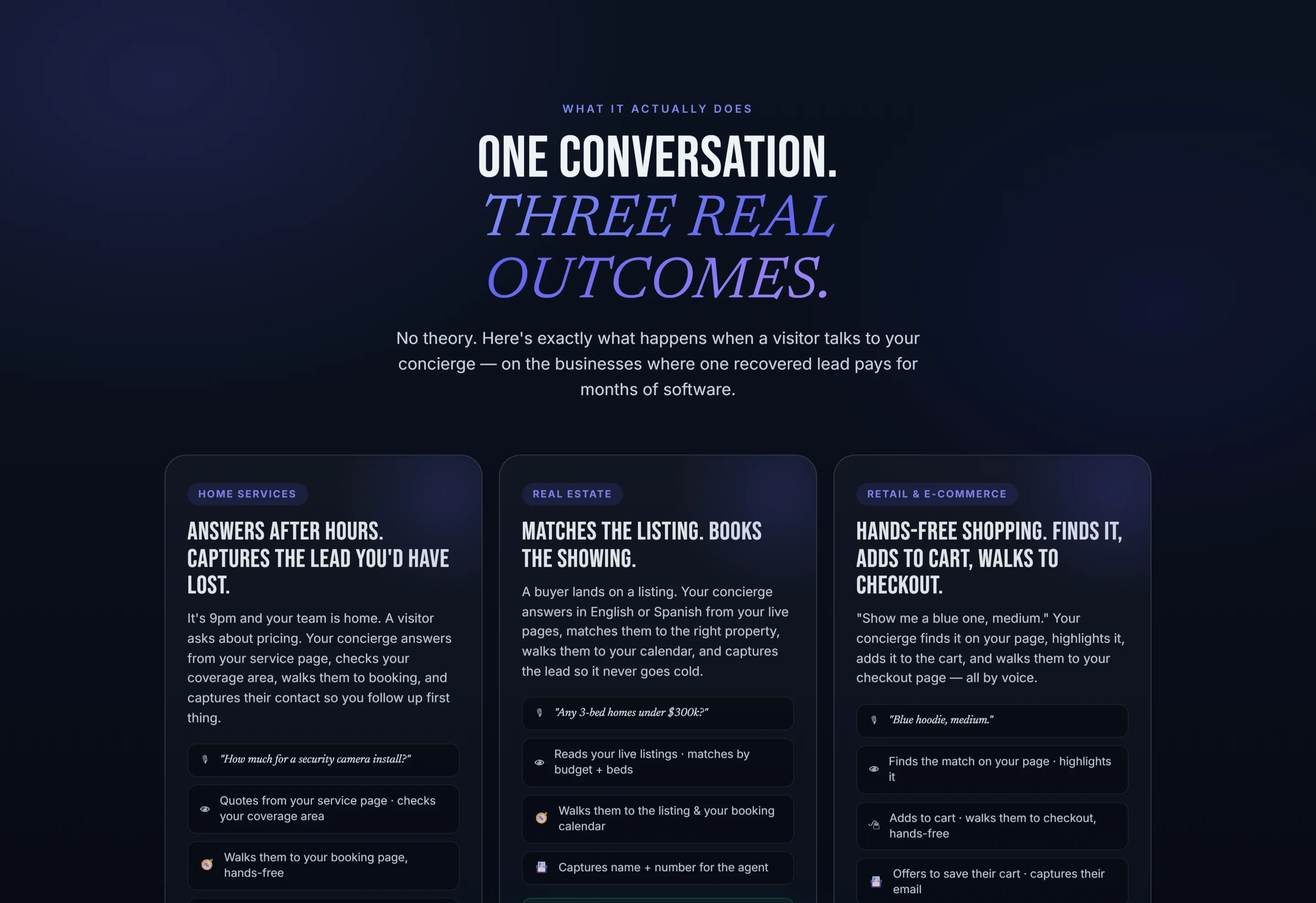
The script is built to recognize when a visitor is describing a legal scenario and immediately shift to a safe script: acknowledge, collect facts, hand off. It never generates an opinion, never cites a statute, and never says "you should. " The owner dashboard shows exactly what each visitor asked for and whether the lead was captured or lost—so you can see if your intake script is working without reviewing every chat log.

The Handoff That Protects Everyone
When the concierge determines a visitor has a specific legal situation, it offers to connect them with a licensed attorney on your team. The visitor can schedule a call, request a callback, or leave a voicemail. The concierge does not summarize the legal issue for the attorney—it passes the raw facts the visitor provided. That keeps the line clear between intake and advice.
What About Spanish-Speaking Visitors?
The same rules apply in any language. A Spanish-speaking visitor asking "¿Tengo caso? " (Do I have a case? ) must not receive a legal opinion in Spanish either. Pet Buddy Concierge handles both English and Spanish natively, using the same safe intake scripts. The visitor gets a natural conversation in their preferred language; the firm gets a qualified lead without UPL risk.
Common questions
Can I program the concierge to give general legal information like 'the statute of limitations is X years'?
No. General information that a visitor could apply to their own situation is still considered legal advice by many state bars. Stick to factual intake questions only.
What if a visitor asks 'Is this worth suing over?'
The concierge should reply: 'That's a question for one of our attorneys. Would you like to schedule a free consultation to discuss your situation? ' and then collect contact info.
Does the dashboard show me what legal topics visitors ask about?
Yes. The outcome dashboard shows you the topics visitors raised—divorce, injury, contract dispute—without the concierge ever evaluating those topics. You can see demand trends without crossing the line.
Can the concierge hand off to different attorneys based on the case type?
Yes. If the visitor selects 'personal injury,' the concierge can route to the PI attorney's calendar. If 'family law,' to a different calendar. The routing is based on the visitor's selection, not the concierge's assessment.

The One Rule That Covers Everything
If your website says what a law means for a specific person, you are practicing law. If it just asks what happened and who to call, you are qualifying a lead.
That single rule makes every decision simple. Does your concierge script answer "what should I do? " No—it asks "what happened? " and "when can we talk? " The rest belongs to the human attorney on the other end of the handoff.
What Your Dashboard Will Show You
After a week with Pet Buddy Concierge on your site, the dashboard shows how many visitors described a legal scenario, how many were handed off to an attorney, and how many left without taking action. You might see that most lost leads happen after 9 PM—when no human is available to take the handoff. That tells you exactly where to adjust your staffing or your concierge's after-hours message.

Give your website a voice
Pet Buddy greets every visitor, answers in English or Spanish, and books the next step - live in minutes.
See it live